Knowing Allah
معرفة الله
Learn the beautiful Names of Allah and understand how much He loves you and takes care of you.
15 Names for Young Believers
Click on any name to learn more about it
 1
1الله
Allah
The One True God
Our Creator who loves us
The name "Allah" is derived from "Al-Ilah" (The God), meaning "The One worthy of all worship." It is the Supreme Name (Al-Ism Al-A'dham) that encompasses all 99 beautiful names and attributes. This name is unique to the Islamic concept of God - it cannot be pluralized, has no gender, and exists in no other language in this exact form, emphasizing the absolute Oneness (Tawhid) that is the foundation of Islam.
Example:
When making dua, starting with "Ya Allah" is calling upon God with His greatest name that includes all His attributes - His mercy, power, knowledge, and justice simultaneously. The Prophet (PBUH) taught that this name has special acceptance in supplication.
 2
2الرَّحْمَن
Ar-Rahman
The Most Merciful
The One who loves us SO much
Ar-Rahman is an intensive form (صيغة المبالغة) indicating the vastness and overwhelming abundance of divine mercy. This mercy is intrinsic to Allah's essence and extends universally to all creation - believer and disbeliever, human and animal, righteous and sinful - in this life. The Quran declares "My mercy encompasses all things" (7:156). Unlike Ar-Raheem which is specific to believers in the Hereafter, Ar-Rahman's mercy reaches everyone in this world.
Example:
When the Prophet Muhammad (PBUH) was brutally stoned in Ta'if until his sandals filled with blood, Angel Jibreel offered to crush the city between two mountains. The Prophet refused, saying "I hope Allah will bring forth from their descendants people who will worship Allah alone." This embodied Ar-Rahman's universal mercy.
 3
3الخَالِق
Al-Khaliq
The Creator
The Maker of everything
Al-Khaliq comes from "khalaqa" (خلق) - to create, measure, design, and bring into existence. Creation in Islam occurs in three divine stages: Al-Khaliq (The Creator - determines and plans), Al-Bari (The Originator - brings from non-existence to existence), and Al-Musawwir (The Fashioner - gives form and proportion). Allah creates ex nihilo (from nothing) with perfect knowledge, wisdom, and purpose. Every atom, galaxy, and living cell demonstrates intentional design.
Example:
Modern science reveals staggering complexity: DNA contains 3 billion base pairs of information, the human brain has 86 billion neurons, the universe is fine-tuned to 1 in 10^120 precision. Each discovery unveils another layer of Al-Khaliq's masterful design. As the Quran challenges: "Or were they created by nothing, or were they the creators?" (52:35)
 4
4السَّمِيع
As-Sami
The All-Hearing
Allah hears everything
As-Sami (السميع) encompasses perfect, unlimited hearing of all sounds, speech, thoughts, and even intentions across all of creation simultaneously. Unlike human hearing limited by distance, frequency range, and the ability to focus on one sound at a time, Allah hears the whisper in one's heart, the footsteps of an ant, the glorification of cells in the body, and billions of prayers occurring at the same moment - each heard perfectly, individually, and completely. This divine attribute combines with Al-Basir (All-Seeing) and Al-Alim (All-Knowing) to demonstrate complete awareness.
Example:
When Khawlah bint Tha'labah complained to the Prophet (PBUH) about her husband's treatment, Aisha (RA) was in the same room but couldn't hear all her words. Yet Allah heard from above seven heavens and revealed Surah Al-Mujadilah (58:1): "Allah has heard the words of the woman who argues with you about her husband." Aisha marveled: "Blessed is the One whose hearing encompasses all things!"
 5
5البَصِير
Al-Basir
The All-Seeing
Allah sees everything
Al-Basir (البصير) denotes seeing all things - visible and invisible, apparent and hidden, past and future, external actions and internal intentions - without any limitation of distance, darkness, or dimension. Allah's seeing is not like human vision requiring eyes and light; He sees the movement of subatomic particles, the thoughts forming in minds, the sincerity in hearts, and the future consequences of present actions. Combined with As-Sami and Al-Alim, this forms complete divine awareness. Importantly, Allah's seeing is not cold surveillance but merciful attention - He sees to guide, protect, and ultimately judge with perfect justice.
Example:
When Prophet Yusuf (AS) was alone in a palace room with Zulaykha trying to seduce him, he could have sinned with no human witness. But he exclaimed "Indeed, He is my Lord. He has made good my residence. Indeed, wrongdoers will not succeed" (12:23). He knew Al-Basir was watching, which gave him strength to flee. Allah later vindicated him because He saw the truth.
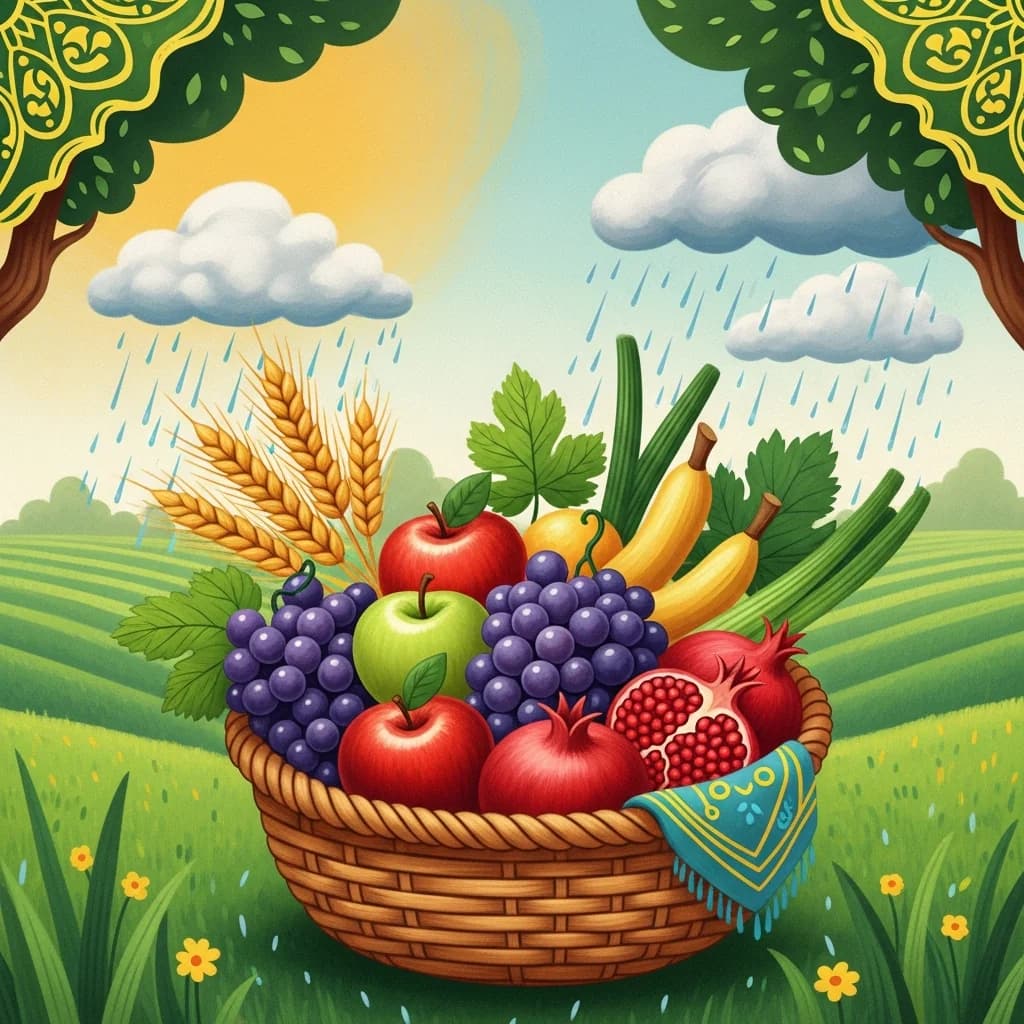 6
6الرَّزَّاق
Ar-Razzaq
The Provider
The One who gives us everything we need
Ar-Razzaq (الرزاق) is the intensive form meaning "The Constant Provider" who continuously sustains all creation. Rizq (provision) in Islamic theology encompasses far more than material wealth - it includes knowledge, guidance, health, good character, beneficial relationships, opportunities, and even trials that bring spiritual growth. Ar-Razzaq provides according to His infinite wisdom, not necessarily according to our limited desires. Every creature's sustenance is guaranteed, as Allah says: "There is no creature on earth whose provision is not guaranteed by Allah" (11:6).
Example:
When Maryam (AS) was in seclusion in the prayer chamber, Prophet Zakariya would find fresh fruit with her - summer fruit in winter, winter fruit in summer. When he asked where it came from, she replied: "It is from Allah. Indeed, Allah provides for whom He wills without account" (3:37). This miracle taught that rizq comes from unexpected sources when you trust Ar-Razzaq.
 7
7الغَفُور
Al-Ghafur
The Forgiving
The One who forgives when we say sorry
Al-Ghafur (الغفور) comes from "ghafara" (to cover, conceal, and protect) and is an intensive form meaning "The Oft-Forgiving" or "The All-Forgiving." Allah's forgiveness involves three merciful acts: (1) concealing the sin so others don't see it, (2) removing its spiritual consequences when we sincerely repent, and (3) not reminding us of it on the Day of Judgment. Remarkably, sincere tawbah can transform sins into rewards - Allah says He will replace the bad deeds of those who repent with good deeds (25:70). Al-Ghafur forgives repeatedly, no matter how many times we fall, as long as we return with genuine remorse.
Example:
A man came to the Prophet (PBUH) and confessed to adultery four times, seeking punishment to purify himself. After the punishment, the Prophet (PBUH) said: "He has repented with such repentance that if it were distributed among a nation, it would suffice them all." This shows Allah's forgiveness doesn't just erase - it elevates and purifies. The Quran beautifully states: "Allah loves those who turn to Him in repentance" (2:222) - not just accepts, but LOVES.
 8
8الوَدُود
Al-Wadud
The Loving
The One who loves us with special love
Al-Wadud (الودود) comes from "wudd" meaning affection, tender love, and friendship. This is a unique type of love - warm, caring, and expressed through continuous blessings and mercy. Al-Wadud appears only twice in the Quran (11:90 and 85:14), making it precious. It describes Allah as both loving His righteous servants and being worthy of being loved. Unlike human love which is conditional and can fade, Al-Wadud's love is constant, pure, and transformative. The Quran teaches us specific deeds that earn Allah's special love, making His love accessible through our choices.
Example:
The Prophet (PBUH) said: "When Allah loves a servant, He calls Jibreel and says: 'I love so-and-so, so love him.' Then Jibreel loves him and calls out in the heavens: 'Allah loves so-and-so, so love him.' Then the people of the heavens love him, and acceptance is placed on earth for him." (Bukhari & Muslim) This shows that Allah's love for you causes love to cascade from the heavens to earth.
 9
9الحَفِيظ
Al-Hafiz
The Protector
The One who keeps us safe
Al-Hafiz (الحفيظ) comes from "hifz" meaning to guard, preserve, protect, and maintain with complete watchfulness. This divine attribute operates on multiple levels: Allah protects creation physically (guardian angels, natural laws), preserves our deeds in perfect records (no good deed is lost), guards His divine revelation (the Quran is unchanged for 1400+ years), maintains the entire universe (atomic bonds, planetary orbits), and most importantly, protects the faith of believers from corruption. Al-Hafiz never sleeps, never forgets, and nothing escapes His preservation.
Example:
Allah declares in the Quran: "Indeed, it is We who sent down the Reminder (Quran), and indeed, We will be its Guardian" (15:9). While previous scriptures were altered by humans, the Quran remains word-for-word identical worldwide - from Morocco to Indonesia, memorized perfectly by millions including children. This is Al-Hafiz actively preserving His final message.
 10
10العَلِيم
Al-Alim
The All-Knowing
Allah knows everything
Al-Alim (العليم) comes from "'ilm" meaning knowledge, and denotes The All-Knowing whose knowledge is infinite, eternal, and encompasses absolutely everything. Unlike human knowledge which is acquired through learning and can be forgotten, Al-Alim's knowledge is inherent to His essence - He has always known and always will know. His knowledge includes: (1) what was - every detail of history, (2) what is - every atom in real-time across the universe, (3) what will be - the entire future, (4) what could have been - all possibilities that didn't occur, and (5) even the impossible - what can never happen. Nothing is hidden from Al-Alim.
Example:
In Surah Luqman 31:16, Allah describes His knowledge: "If there should be even the weight of a mustard seed within a rock or in the heavens or in the earth, Allah will bring it forth. Indeed, Allah is Subtle and All-Knowing." Imagine a tiny mustard seed inside a massive rock, buried deep in the earth - Al-Alim knows its exact location, composition, and molecular structure. Now multiply that by every atom in existence.
 11
11الكَرِيم
Al-Karim
The Generous
The One who gives so many gifts
Al-Karim (الكريم) comes from "karam" meaning generosity, nobility, honor, and dignity. Al-Karim encompasses multiple beautiful qualities: giving abundantly without being asked, forgiving without being begged, honoring His servants beyond their worth, and providing without expecting anything in return. His generosity is infinite - He gives to billions of people continuously without His treasures ever diminishing. The hadith qudsi states: "O My servants, if the first of you and the last of you, the human of you and the jinn of you, were all to stand in one place and ask of Me, and I gave everyone what they asked for, that would not decrease what I have except as a needle decreases the ocean when dipped into it."
Example:
When you make a mistake and expect punishment, Al-Karim can give you forgiveness instead. When you do a small good deed, Al-Karim can multiply it by 10, 700, or more. When you sincerely ask for Paradise, Al-Karim can give you the highest levels. When the Prophet (PBUH) asked Allah, "Who among your servants is most beloved to You?" Allah said, "The one who is most generous." He loves generosity because it reflects His own attribute.
 12
12السَّلَام
As-Salam
The Peace
The One who gives peace
As-Salam (السلام) comes from the root س-ل-م (s-l-m) meaning peace, safety, wholeness, and submission. As-Salam has profound meaning: Allah is perfect and free from all defects, flaws, and imperfections. He is also the source and grantor of all peace - peace in hearts, peace between people, and the ultimate peace of Paradise (Dar As-Salam). Remarkably, Islam, Muslim, and Salam all derive from the same three-letter root, showing that true peace comes from submission to Allah. The greeting "As-salamu alaykum" (peace be upon you) is not just politeness - it's a dua invoking Allah's peace on someone.
Example:
After every prayer, we say "Allahumma antas-Salam wa minkas-Salam, tabarakta ya Dhal-Jalali wal-Ikram" (O Allah, You are Peace and from You comes peace. Blessed are You, O Possessor of Majesty and Honor). This teaches us that the peace we just experienced in prayer came from As-Salam. Paradise is called "Dar As-Salam" (The Abode of Peace) where there will be no anxiety, fear, illness, or death - perfect eternal peace.
 13
13النُّور
An-Nur
The Light
The One who guides us
An-Nur (النور) means The Light - not light that is created, but the source of all light, both physical and spiritual. Scholars explain that Allah IS Light in a manner befitting His majesty - He is not made of light or in need of light, but He illuminates the heavens and earth with both physical light (sun, stars) and spiritual light (revelation, guidance, faith). The Quran is called Nur (5:15), faith is light in hearts, and on the Day of Judgment, believers will have light surrounding them while hypocrites will be in darkness. Allah dispels the darkness of ignorance, disbelief, and misguidance with His Nur.
Example:
The famous Ayat An-Nur (24:35) uses a profound metaphor: "Allah is the Light of the heavens and the earth. His light is like a niche within which is a lamp, the lamp within glass, the glass as if it were a brilliant star, lit from a blessed olive tree, neither of the east nor west, whose oil would almost glow even without fire touching it. Light upon light..." Scholars say this describes layers of guidance - revelation illuminating the pure heart, which then radiates to others.
 14
14المَلِك
Al-Malik
The King
King of everything
Al-Malik (الملك) means The Sovereign King who possesses absolute, eternal, and unlimited kingship over all existence. Unlike human kings whose authority is limited by geography, time, and power, Al-Malik owns and controls everything - the seen and unseen, this world and the next, angels, humans, jinn, and all of creation. He is also called "Malik Al-Mulk" (Owner of Sovereignty) in the Quran (3:26), meaning He grants kingdoms to whom He wills and takes them away from whom He wills. Every earthly king's authority is temporary, borrowed, and will end - but Al-Malik's sovereignty is eternal and absolute.
Example:
On the Day of Judgment, Allah will ask: "Whose is the kingdom today?" (Quran 40:16). The entire universe will be silent. Then He Himself will answer: "It belongs to Allah, the One, Al-Qahhar (The Irresistible)." This shows that all other claims to power and authority will be exposed as temporary illusions. Even the greatest empires in history - Roman, Persian, Ottoman, British - all rose and fell by Al-Malik's decree.
 15
15القُدُّوس
Al-Quddus
The Holy
The most perfect, pure
Al-Quddus (القدوس) comes from "quds" (قدس) meaning sacred, pure, and holy. It indicates absolute purity and perfection - free from any defect, flaw, imperfection, or resemblance to creation. Al-Quddus is free from: (1) shirk (partners or equals), (2) imperfections (needs, weaknesses, changes), (3) resemblance to creation (He is unlike anything we can imagine), and (4) injustice or wrongdoing. The angels constantly glorify Allah with "Subbuhun Quddus" (Most Perfect, Most Holy). This name appears in the Quran in Surah Al-Hashr 59:23 alongside other majestic names, emphasizing His absolute transcendence above all creation.
Example:
When we say "SubhanAllah" (Glory be to Allah), we are performing "tanzih" - declaring that Allah is far above and beyond any imperfection, limitation, or inadequate description humans can conceive. The angels do this continuously. When Allah told the angels He would create Adam as a khalifa (steward) on earth, they responded by glorifying Him: "We glorify You with praise and declare Your holiness" (2:30), acknowledging that even with humans on earth, nothing can diminish Allah's perfect holiness.
MashaAllah!
The Prophet (PBUH) said: “Allah has 99 names. Whoever memorizes them will enter Paradise.”
Learning these names helps us know and love Allah more. Keep learning!